


Is Organic Cotton Worth It for Everyday Tees?
"Organic" is printed on everything from apples to pillowcases. For a T-shirt you'll wear several times a week, it's fair to ask what the word actually means, whether it's worth paying for, and what it can (and can't) do for you.
Here's a clear, hype-free look at organic cotton for everyday tees.
What does "organic cotton" mean?
Organic cotton is cotton grown under organic farming standards. Textile Exchange, a non-profit focused on fiber and materials, defines it simply as cotton that is produced, and certified, according to organic agriculture standards (Textile Exchange glossary).
In the US, those standards are the USDA organic regulations. Under them, most synthetic fertilizers and pesticides are prohibited (a short list of substances can be approved after review), and genetically modified organisms aren't allowed (Farm Progress, summarizing the USDA organic label). Instead, organic growers rely on practices such as crop rotation, building soil health and non-synthetic pest management.
Organic fiber vs organic processing
"Organic cotton" refers to how the fiber is grown. Turning that fiber into fabric (spinning, knitting, dyeing and finishing) is a separate stage. Some standards, such as the Global Organic Textile Standard (GOTS), cover processing as well as fiber. In the US, the USDA has published guidance on how textiles may be labeled as organic (USDA National Organic Program textile labeling memo), and the Organic Trade Association explains that finished textile products implying organic certification must meet either the USDA organic regulations or GOTS (Organic Trade Association). If those details matter to you, look for clear information from the brand about which claims apply to fiber and which to finished garments.
Organic vs conventional cotton: what's actually different?
The growing
The main difference is on the farm: most synthetic pesticides and fertilizers are off the table, and genetically modified seed isn't permitted. Many people choose organic for this reason alone, because they'd prefer the clothes they wear every day to be made from fiber grown this way.
The feel
Here's where it's important to be honest. Cotton fiber is cotton fiber; how soft a T-shirt feels depends a great deal on the quality of the fiber, the yarn, the knit and the finishing, not just whether it's organic. A well-made organic tee can feel wonderfully soft, but so can a well-made conventional one, and a poorly made garment won't feel good whatever the label says.
What you can say is that a 100% cotton tee, organic or not, is a natural fiber that many people find comfortable against the skin and pleasant to wear in warm weather.
The care
Organic cotton is cared for exactly like conventional cotton. Follow the label; it doesn't need special treatment.
What organic cotton can't promise
Because "organic" is a powerful word, it's worth being clear about its limits:
- It isn't a medical claim. If you have sensitive skin or a skin condition, organic cotton isn't a guarantee of anything, as fabric dyes and finishes can also play a role. If you have specific concerns, speak to a dermatologist.
- It doesn't make a tee fit better. Cut and construction decide fit.
- It doesn't automatically mean long-lasting. Durability depends on fabric quality and how you wash and dry the garment.
So, is it worth it?
For an everyday T-shirt, organic cotton is worth it if:
- You value how the fiber is grown and want to choose organic where you can
- You prefer natural fibers against your skin
- The tee also gets the basics right: fit, fabric weight, length and color
That last point is the one people forget. The most responsible T-shirt is the one you actually wear, often and for years. An organic tee that doesn't fit will sit in a drawer; a well-fitting one that you reach for weekly is the better choice by any measure.
Questions to ask before you buy
If you're comparing organic cotton tees, a few quick questions help separate a good buy from a good label:
- Is it 100% organic cotton, or a blend? Both can be fine, but you should know what you're paying for.
- What's the fit like? Look for clear size charts with body length and sleeve measurements, not just S/M/L.
- What does the care label say? Simple care (machine wash, tumble dry low) makes a tee easier to live with.
- What happens if it doesn't fit? A clear returns or exchange policy matters more than ever when buying online.
How to make cotton tees last longer
These simple habits help any cotton T-shirt keep its shape and color:
- Wash cold. Cold water is gentler on fibers and colors, and saves energy.
- Turn tees inside out before washing to reduce surface wear and fading.
- Wash with similar colors and avoid overloading the machine.
- Tumble dry low, or line dry. High heat is one of the main causes of shrinkage and fabric wear in cotton.
- Avoid bleach on colored tees.
- Fold, don't hang, heavier knits to avoid stretched shoulders.
- Buy fewer, better. Owning a smaller number of tees you love means each one earns its place.
Organic cotton, cut for real bodies
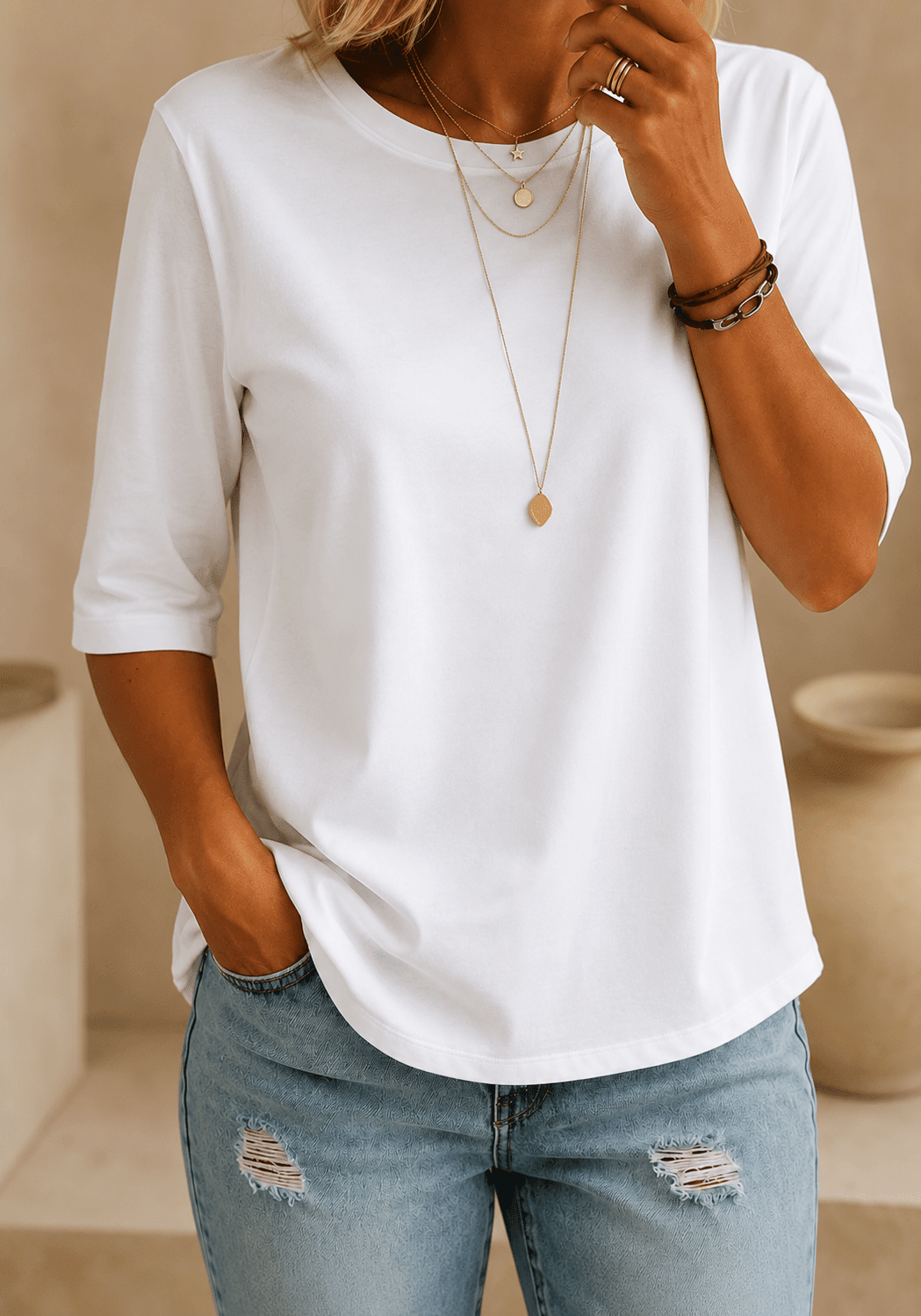
The Calvera Essential Comfort Tee is made from 100% organic cotton and designed to fit women over 50: a relaxed fit that skims the tummy, elbow-length sleeves with a soft rolled cuff, and a choice of Round or V-neck. It comes in Petite, Regular and Tall lengths, sizes XS–4XL (AU 4–34) and 25 colors.
Care is simple: machine wash cold, tumble dry low. AU shipping is free, bundles save up to 29%, and our 90-Day Fit Promise means you can swap or get a refund if it's not right.
Discover the organic cotton Calvera Tee →
FAQ
Is organic cotton softer than regular cotton?
Not automatically. Softness depends mostly on fiber quality, yarn and knit. A well-made organic cotton tee can be very soft, but the word "organic" refers to how the cotton was grown.
Does organic cotton shrink?
Like all cotton, it can shrink with high heat. Washing cold and tumble drying low (or line drying) helps it keep its size.
Is organic cotton better for sensitive skin?
Some people prefer it, but it's not a medical guarantee. Dyes and finishes can also affect how a fabric feels on the skin. If you have a skin condition, ask a dermatologist.
How do I wash organic cotton?
Exactly like regular cotton: follow the care label. For our tee, that's machine wash cold and tumble dry low.